Serving Soledad, CA and surrounding areas. (831) 315-4180
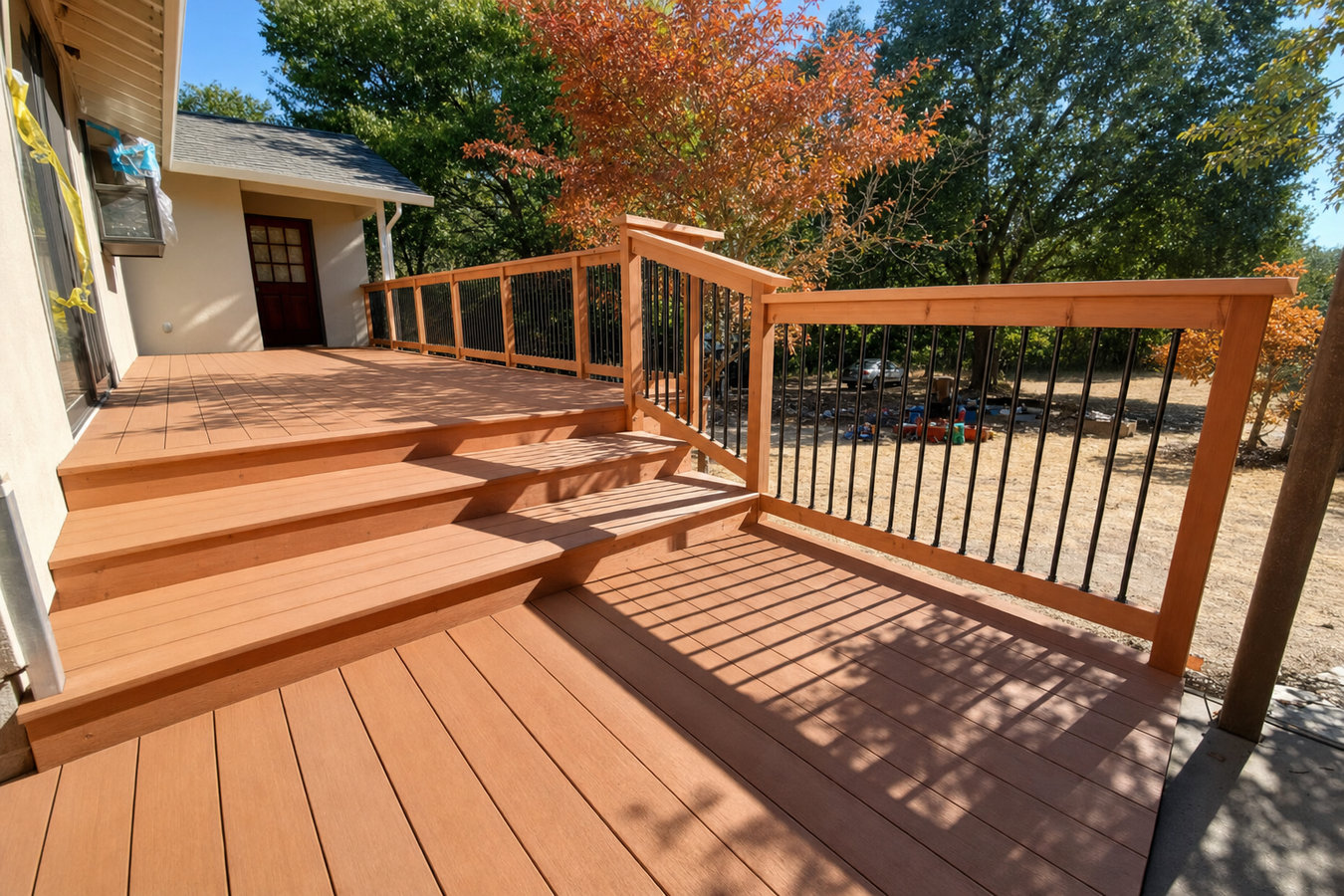
A railing that wobbles or fails inspection is more than an eyesore - it is a liability. We install railings anchored to your deck frame, built to California code, and matched to the Salinas Valley climate.
Deck railing installation in Soledad means removing old railing if needed, anchoring new posts directly into the deck frame, and installing rails, balusters, and top caps to meet California height and spacing requirements - most residential railing projects wrap up in one to two days of on-site work, with the full timeline including permit processing running one to two weeks.
In California, any deck elevated 30 inches or more above the ground requires a railing - it is a safety requirement, not a style choice. The railing is only as strong as how the posts are anchored, and posts bolted to the outside face of a deck rather than tied into the frame are a common failure point on older builds. If your deck also has boards or framing that need attention, our deck repair and replacement work often pairs naturally with railing replacement - it is more efficient to address both at once than to come back later.
Material choice matters more in Soledad than in a cooler coastal climate. The Salinas Valley's intense summer sun and UV exposure can crack and fade wood railings faster than most homeowners expect - which is why we walk through the material options at every on-site estimate and explain what each one will actually look like in five years, not just on day one.
Stand at the railing and give it a firm shake with both hands. If it moves, sways, or feels loose at the base of any post, that is a safety problem - not just a cosmetic issue. A railing that moves under pressure is not protecting anyone from a fall. This test takes 30 seconds and tells you most of what you need to know.
Soledad's dry summers and strong UV exposure are hard on wood railings. If you can see cracks running along the grain, splinters sticking up from the top rail, or sections that have pulled away from their connections, the material has broken down past the point where painting or sealing will fix it. Cosmetic treatments on structurally failing wood are a short-term patch on a long-term problem.
If you can fit your fist through the space between the vertical pieces, the spacing is too wide to meet current California safety standards. This happens on older railings built to different rules, or when balusters have shifted or been removed over time. Wide gaps are a particular hazard for young children and will show up on any home inspection report.
Many homes in Soledad built during that growth period have original wood railings now more than 20 years old. In this climate, wood at that age is often soft or rotting at the post bases where moisture collects - and that is not always visible from a distance. If your home dates to that era and the railing has never been replaced, it is worth a close look before the next buyer's inspector finds the problem first.
We install wood, composite, and powder-coated aluminum railings on existing decks and on new builds. Every installation anchors posts into the deck frame - not just surface-mounted to the outside edge - because that connection is what keeps the railing solid when someone leans on it. Baluster spacing is set to meet California's requirement that a 4-inch sphere cannot pass through, which is the practical safety standard for keeping small children from slipping between posts. If you are also dealing with a deck that needs board replacement or structural repair, our custom deck design and build process lets you address both at once rather than scheduling two separate projects.
We handle the permit application with the City of Soledad when the project requires one, coordinate the inspection, and include debris removal in the project quote. At the on-site estimate, we measure your railing run, assess the condition of the deck frame the posts will anchor into, and walk you through material choices with honest information about what each option will look like in Soledad's climate after a few years - not just on installation day.
Good for homeowners who prefer a traditional look and plan to maintain the finish with regular cleaning and resealing.
Suits homeowners who want the appearance of wood with significantly less maintenance in Soledad's intense summer UV.
Best for homeowners who want a clean, modern look and a material that holds up in heat and agricultural dust with minimal upkeep.
Works for decks where the structure is sound but the railing has failed safety tests or simply reached the end of its useful life.
Soledad's summer temperatures regularly climb into the 90s with strong UV exposure for much of the year. Wood railings in this climate can dry out, crack, and fade faster than in cooler coastal areas - which means the material you choose has a bigger effect on long-term maintenance costs here than it would in, say, Carmel or Monterey. Composite or powder-coated aluminum holds up significantly better under those conditions. The Salinas Valley also produces agricultural dust and seasonal winds that work their way into railing joints and surface coatings - smooth, non-porous materials are easier to wipe clean and hold their finish longer. Homeowners in Spreckels and Chualar deal with the same agricultural dust and sun exposure and know that material choice is not just about looks.
Soledad has seen steady residential growth from the late 1990s through the 2010s, and many homes from that era are now old enough that original wood railings are reaching or past the end of their useful life - even when they do not look dramatically deteriorated from the street. If your home was built during that period, a close look at the post bases is worth doing before a buyer's inspector does it for you. Newer subdivisions in Soledad may also have HOA guidelines covering railing materials and colors - we review those rules before finalizing your design so nothing needs to be changed after the fact.
We ask a few basics - roughly how long your railing run is, what your current railing is made of, and what material you are considering. This takes five to ten minutes and helps us show up to your estimate with useful information. We reply within one business day.
We measure the railing run, assess the condition of your deck frame, and walk through material options with you at the property. The visit takes 30 to 45 minutes. You leave with a clear sense of cost, timeline, and whether a permit is needed - no vague ballparks.
If your project requires a building permit - which is common for structural railing work in Soledad - we handle the application on your behalf. Processing typically takes a few business days to a week. We keep you updated on status so you are not left wondering when work can begin.
We remove the old railing, anchor new posts into the deck frame, and install rails, balusters, and top caps. Most standard projects finish in one to two days of installation. If a permit was pulled, we coordinate the city inspection. We do a final walkthrough with you before we leave - grab every post and check every gap while the crew is still on-site.
We measure your run, walk through material options, and give you a written quote covering labor, materials, permit fees, and debris removal - no obligation.
(831) 315-4180The single most important structural detail in a railing is how the posts connect to the deck. We anchor posts into the deck's structural framing - not bolted to the outside edge - because that connection is what keeps the railing from pulling away when someone leans on it. It is a distinction that separates a railing that lasts from one that wobbles within a few seasons.
We recommend materials based on how they actually perform in Soledad's heat and UV - not which product has the best margin. If a wood railing is going to need annual resealing in this climate, we say so upfront. If composite or aluminum gives you a better ten-year outcome for your situation, we explain why.
Your estimate covers materials, labor, permit fees, and debris removal as separate line items before we ask for your signature. If anything changes during the project, we discuss it with you before it affects your bill. The number you agree to is the number you pay - no line items that appear on the final invoice after the work is done.
We submit the permit application to the City of Soledad, coordinate the inspection visit, and keep you updated throughout. You do not need to contact the building department at any point. For authority link verification, the California Department of Housing and Community Development publishes statewide residential building requirements.
A railing that is properly anchored, code-compliant, and built from materials that hold up in this climate is not a luxury - it is what keeps your deck safe and your home defensible on inspection. That is the standard we build to on every project, regardless of size.
California railing requirements are covered by the California Building Standards Commission. For industry best practices on baluster spacing and post anchoring, the North American Deck and Railing Association is a reliable reference.
If your deck needs more than new railings, a full custom build gives you the layout and materials you actually want from the ground up.
Learn MoreFailing boards, soft joists, or a structure that has seen better days - deck repair often pairs naturally with railing replacement.
Learn MoreSummer is the busiest season for deck work in the Salinas Valley - lock in your spot before the schedule fills up and your project gets pushed to fall.